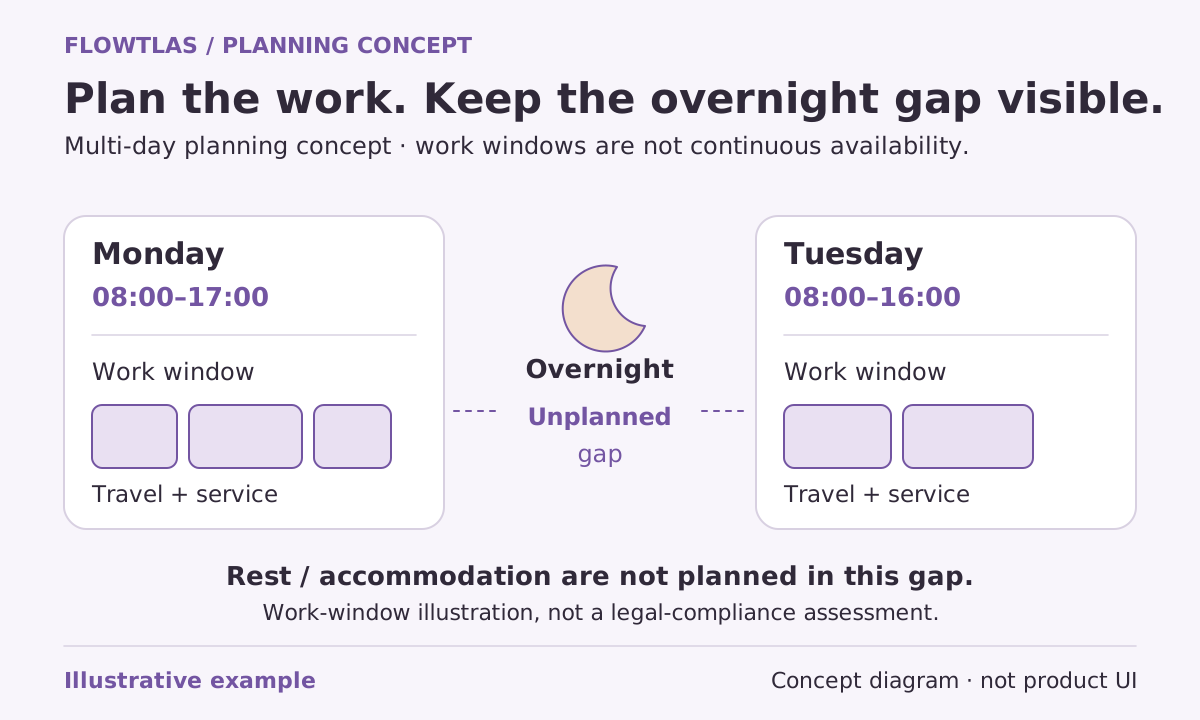
Practical planning notes
Skills and task dependencies: make the right work happen in the right order
Two jobs can sit next door to one another and still belong on different tours. One may need a specialist; another may only make sense after preparation elsewhere. Distance matters, but eligibility and dependencies decide which sequences are meaningful in the first place.
 Flowtlas Operations4 min read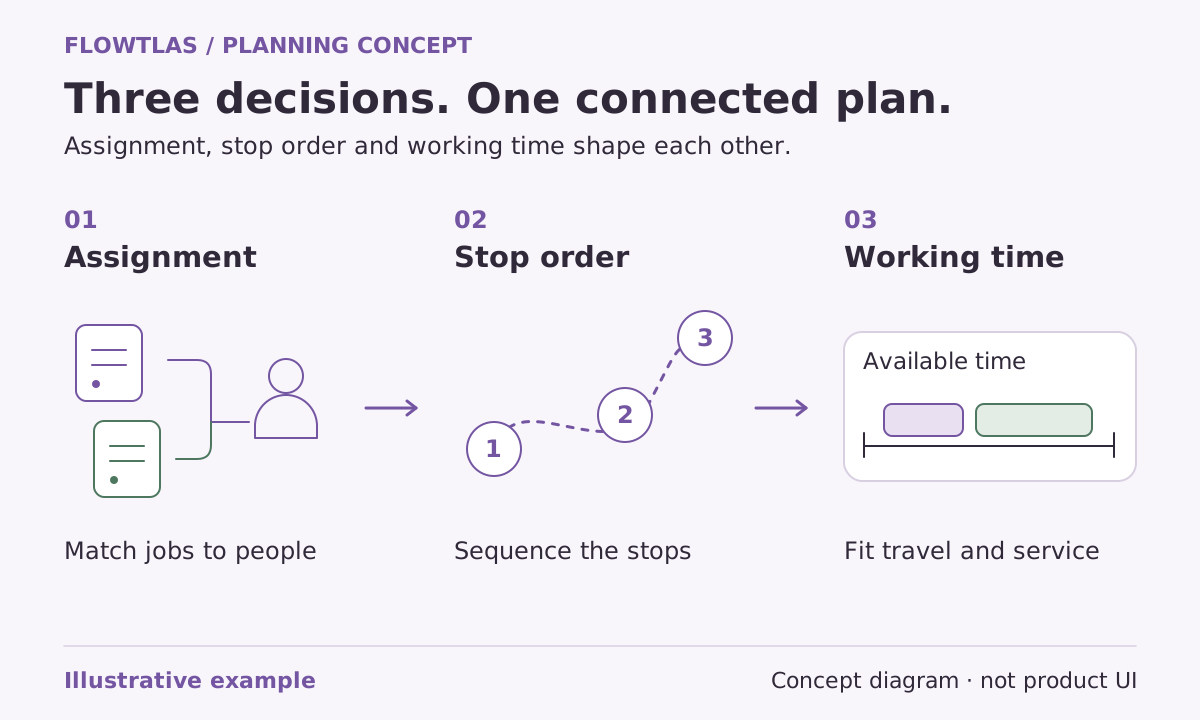
The short version
State who may do the work, which jobs must stay connected and what timing actually means. Never remove a real requirement to make the map look simpler.
Start with eligibility, not proximity
Separate the people allowed to do a job from the people who happen to be nearby. A useful job record states the relevant skill requirement and any restrictions on vehicles or workers. The resource records then need to describe the actual people and equipment available in the planning period.
A Flowtlas tour combines a vehicle with its assigned workers. Supplied skills and restrictions determine whether that tour is eligible for a task. These tags are planning inputs: the planning engine does not independently inspect equipment, verify a certificate or renew an expired qualification. [8]
Give those records an owner. Agree who updates a qualification, who handles temporary absence and how a dispatcher learns about an equipment change. Accurate tags are more useful than an elaborate skill taxonomy that nobody maintains.
Decide whether it is one ordered job or several related jobs
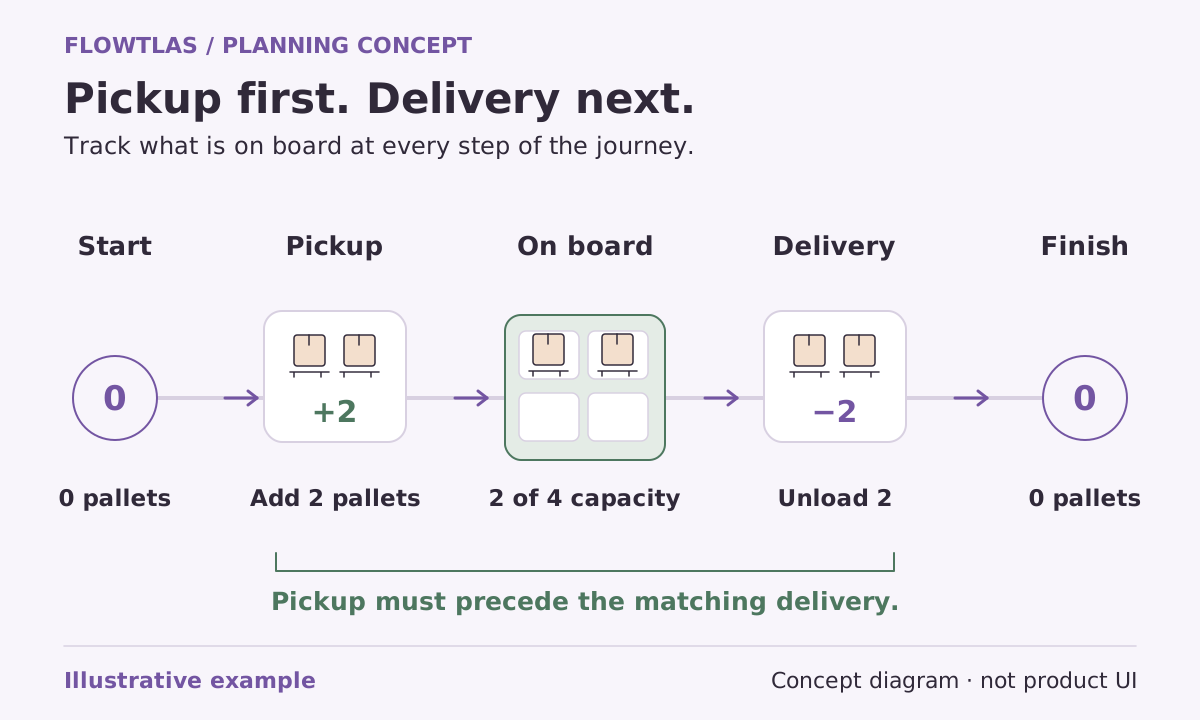
A collection followed by its delivery is often one connected job. A preparation visit followed by a later inspection may be separate tasks with a relationship. Choose the representation that matches your operation rather than splitting every address into an independent visit.
Flowtlas can keep an ordered stop chain inside one task on one tour. Each stop can carry service duration, a visit window and load changes. For separate tasks, explicit rules can require the same tour or different tours. Those are different modelling tools, not interchangeable labels. [8]
| Requirement | Model to examine |
|---|---|
| Collect, then deliver the same goods | An ordered stop chain within one task |
| Preparation and follow-up must use one tour | A same-tour relationship between tasks |
| Two jobs must not share a tour | An explicit different-tour relationship |
| A follow-up must respect a timing gap | An order/gap rule with suitable same-tour scope |
Translate the timing promise precisely
“After preparation” is not precise enough by itself. Ask which stop marks preparation, whether the relevant point is its scheduled time or the end of its service, and how much delay is allowed. A short description can hide a significant operational dependency.
For work on the same tour, ordering and minimum or maximum gaps can constrain scheduled stop times. Pair a timing relationship with a same-tour rule when sharing a route is required. This is not a general system for synchronizing several vehicles at the same instant. [8]
Validate a representative request before using a relationship for a critical handover. Keep service duration and the meaning of the timing gap visible together; do not assume the software interprets an informal instruction exactly as a person would.
Example: preparation followed by a specialist check
In a fictional maintenance scenario, a team prepares equipment at one location and performs a follow-up inspection. The inspection needs a specialist skill. The operation wants both jobs on one tour, with preparation before inspection and a defined interval between them.
Check that at least one available tour has the supplied specialist skill. Then verify the same-tour rule, ordering, timing gap, visit windows and both service durations. If the combination leaves no acceptable assignment, investigate the records and genuinely available alternatives. Removing the specialist requirement would change the job, not solve it.
This is an illustrative modelling scenario, not a calculated route or customer result. Do not infer regulatory approval or certified working practices from a skill match.
Review the constraints before relaxing anything
Read the returned assignment and timing, not only the route shape. Check that connected work remains on the intended tour and that exceptions are visible. Keep the original scenario so a later change can be explained to the person who owns the customer commitment.
Task-relation requests cannot currently use the optional vehicle-fairness phase. A balanced-looking allocation is not a reason to ignore hard requirements. Confirm supported request shapes, enabled planning functions and integrations with Flowtlas before relying on this workflow. [8]
Take it into your next planning session
Practical checklist
- Verify skills and availability with the responsible resource owner.
- Distinguish ordered stops in one task from relationships between separate tasks.
- Define same-tour or different-tour requirements explicitly.
- Validate ordering, service duration and timing-gap semantics together.
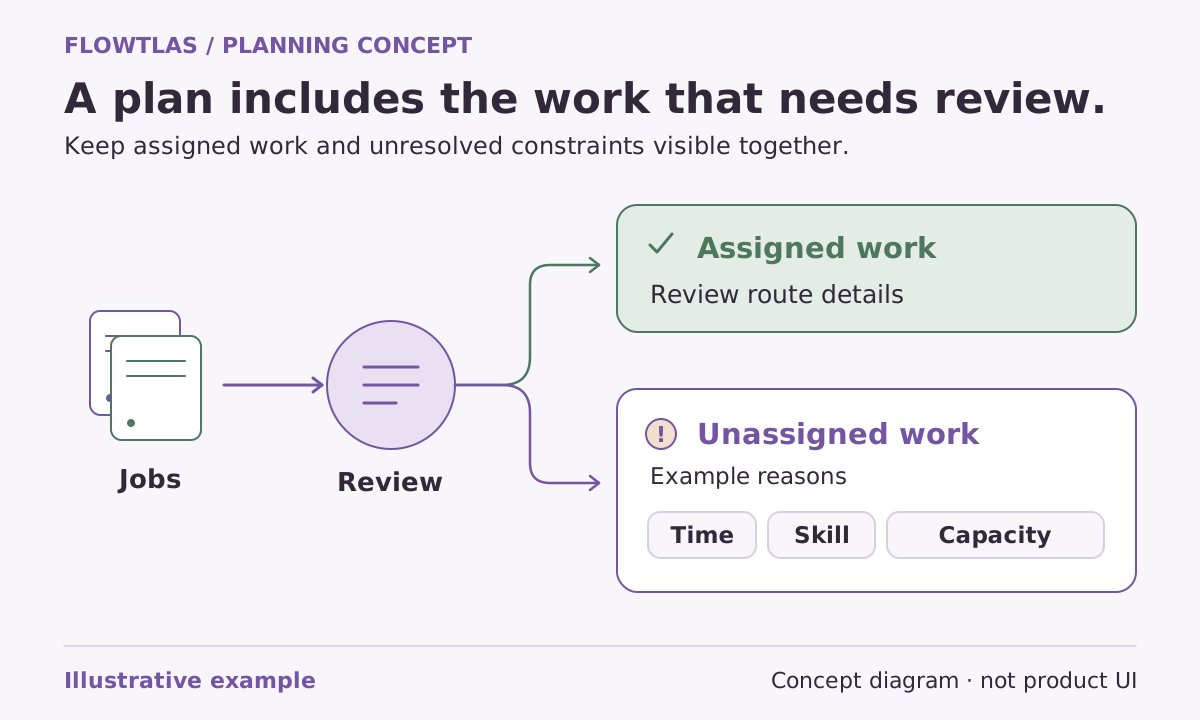
- Keep hard constraints intact when investigating unassigned work.
Product references
These Flowtlas pages explain the planning model. Confirm enabled functions and integrations for your workspace before relying on a workflow.