Practical planning notes
Multi-day route planning: depot returns and overnight stops
A final depot destination does not require a return there every night. Multi-day route planning needs a separate decision about where each working period ends and the next begins. Make required overnight visits explicit before comparing routes.
 Flowtlas Operations3 min read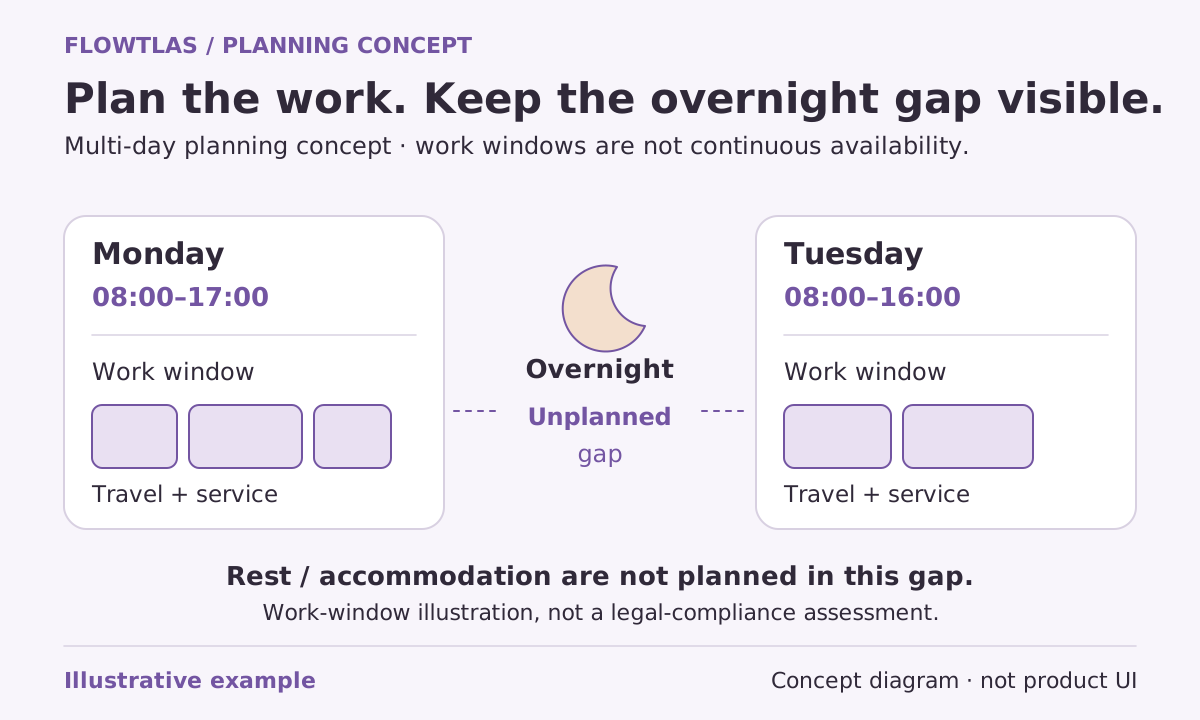
The short version
Choose the overnight arrangement; keep each working period explicit.
A final destination is not a nightly return rule
In the Flowtlas planning model, a final depot endpoint is distinct from required visits between working periods. Specify nightly depot visits or accommodation stops when the operation requires them. [4]
- Return to depot when equipment, replenishment or handover requires it. Include the visit and any service work.
- Specify accommodation when the overnight location is fixed. Include its location and operational requirements.
- Use continuation when no intermediate return location is required. Confirm where the route pauses and resumes.
The planning engine does not select or book hotels. Accommodation, travel policy, rest obligations and legal compliance need separate verification.
Fictional two-day example: compare the overnight choices
Assume an inspection team starts at the depot, serves northern sites on day one and southern sites on day two, then finishes at the depot. Keep the same jobs, customer windows and team availability in every comparison. This is an illustrative timeline, not a calculated plan.
| Step / period | Depot return | Specified accommodation | Continuation |
|---|---|---|---|
| 1. Day one: work | Depot to northern sites | Depot to northern sites | Depot to northern sites |
| 2. Day one: close | Required depot visit | Required accommodation stop | End at the permitted pause location |
| 3. Between periods | Depot arrangements | Prearranged accommodation | Confirm rest and accommodation separately |
| 4. Day two: resume | Depot to southern sites | Accommodation to southern sites | Resume from the pause location |
| 5. Day two: finish | Final depot return | Final depot return | Final depot return |
Keep the horizon separate from working periods
A multi-day horizon is not continuous availability. A Flowtlas tour can span dated work windows with one vehicle and its assigned people. Supply dates, time zones, breaks, limits and downtime; customer access windows remain separate constraints. [4]
Check what the overnight choice requires
Include travel to required overnight stops and onward travel when work resumes. Check equipment collection, handovers and the next appointment against the actual working periods. A chosen stop is not evidence that the schedule fits. [4]
Create dated visits before routing them
Flowtlas’s planning engine plans supplied tasks. Recurrence or service-frequency rules need a separate process to create dated visits. A longer horizon does not generate future customer obligations. [4]
Compare feasible arrangements, then agree access
Review appointments, work duration, breaks, required visits and unassigned work for each alternative. Reject comparisons that quietly relax a requirement. Confirm enabled generation functions and integrations before relying on this workflow in Flowtlas. [4]
Bring an anonymized scenario to discuss suitability and access. Agree a transfer channel before sharing operational data.
Take it into your next planning session
Practical checklist
- Choose nightly return, specified accommodation or continuation.
- Supply dated working periods and customer windows.
- Assign responsibility for overnight arrangements.
- Confirm who creates recurring visits and approves changes.
- Review each period and the final depot return.
Product references
These Flowtlas pages explain the planning model. Confirm enabled functions and integrations for your workspace before relying on a workflow.